

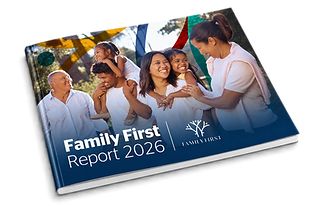
Family First Global Survey 2026
18,013 people. 15 countries. Four generations.
What family time means to them, and what gets in the way.

Why Family First

Family is where we learn to talk, listen and care for each other, and where many of us find our greatest support throughout life. But long hours, busy schedules, screens and distance are squeezing the time families spend together.
Family First was launched by the Varkey Foundation and its founder, Sunny Varkey, on the belief that education reaches far beyond the classroom. It shapes values, and the parents, leaders and societies of the future.
Our mission: to help families everywhere build stronger bonds.
What we do

Show why close families matter
Through research, leading experts and a schools curriculum, we make the case for strong families.
Remove the
barriers to
family time
We work with governments, global institutions, employers, schools and parenting groups to free up time for families.
Make quality time easy
We're building a library of bonding ideas for every kind of family, and creating spaces designed to bring families together.
It starts with listening
To help families, we first had to understand them. So we asked. The Family First Global Survey is the first step in our research programme.
About the survey
The world's first intergenerational study of family bonding, covering children, parents, Gen Z and grandparents in 15 countries. It also introduces the Family Bonding Index, which ranks how strong family connections are in each country.
Every generation agreed: time together matters. But screens and work are getting in the way.
82%
of parents rate family time as very important (79% of grandparents, 74% of children).
60%
of parents say screens and digital devices have harmed their family's chance to bond.
52%
of parents feel they are competing with devices for their child's attention.
54%
of parents say their family spends more time doing tasks than connecting.
48%
of parents say work pressures or lack of time keeps them from family.
90%
of grandparents believe more family time would be good
for their health.


Together, but distracted
Parents aren't the only ones who notice. A third of children (34%) say screen time keeps them from their family, as do half of grandparents (51%). Among Gen Z, 34% call screens the biggest obstacle to family connection, and only 12% say their family isn't distracted when together.

Too busy to connect
Work pressure on parents (48% globally) rises to 68% in Kenya, 61% in Brazil and 59% in Malaysia. Children notice too: 42% say their parents' work gets in the way of time together.

Time together still matters
Gen Z agree: 66% rate family time as very important. But it varies by country. Among parents, the figure ranges from 95% in Nigeria and Kenya to 48% in Japan. Among children, it ranges from 94% in Brazil and Nigeria to 55% in Japan. Care runs both ways: 81% of parents plan to look after their own parents, rising to 96% in Nigeria.

What grandparents told us
For older people, family time is tied to wellbeing. 42% say more of it would improve their mental health, and 40% say it would make them happier or less lonely.

The Family Bonding Index
The full report includes the world's first Family Bonding Index, which scores all 15 countries on the strength of their family connections. Keep the existing download link line after it.
"This landmark report clearly shows that family bonds are under strain. Economic pressures, conflict, geographical distance and technological change all make it harder for families to spend meaningful time together. Across many societies, this is contributing to weaker intergenerational relationships, greater loneliness among older people and less time shared between children, parents and grandparents. Yet the family remains the most fundamental building block of every community, making it more important than ever to understand, protect and strengthen these relationships."
Sunny Varkey, Founder of Family First and the Varkey Foundation
About the research
Research agency We Are Family surveyed 18,013 people in January and February 2026: 6,002 parents, 6,011 of their children aged 9–18, 3,000 grandparents of children aged 9–18, and 3,000 Gen Z aged 13-28.
Countries: Argentina, Australia, Brazil, Canada, China, France, India, Japan, Kenya, Malaysia, Nigeria, Sweden, UAE, UK and US.